


Freight from Türkiye to Iran is an important logistics route for international trade, particularly for Iran’s commercial ties with Europe.
Türkiye’s geographical and political position makes it a gateway for European goods bound for Iran. Understanding the transport rules and restrictions on this route helps shippers move their goods correctly and lawfully.
World Green Line International Transport Company provides freight services from Türkiye for traders and businesses, supported by experienced specialists in Türkiye and Iran.
To find out what it costs to ship from Türkiye to Iran, contact us or complete the freight quote form. Our sales team will get back to you as soon as possible during business hours.
- Request a Quote for Freight from Türkiye
- What Are the Shipping Options from Türkiye to Iran?
- How Much Does It Cost to Ship from Türkiye to Iran?
- What Are the Transit Routes from Türkiye to Iran?
- Imports from Türkiye to Iran
- Freight from Türkiye to Iran with World Green Line
- Frequently Asked Questions About Freight from Türkiye to Iran
Request a Quote for Freight from Türkiye
You can submit a quote request at any time. Enter your shipment details and our sales team will respond as soon as possible during business hours.
World Green Line’s online quote service makes it easier to request a price and saves time. The Persian guide mentions a 3% discount for online bookings. Ask our team whether the offer applies to your shipment.
If you need help using the freight quote form, contact our support team.
"*" indicates required fields
What Are the Shipping Options from Türkiye to Iran?
Goods travel from Türkiye to Iran by road, air and sea. Choosing the right mode can reduce costs and delivery times and help keep your cargo safe. Logistics professionals, traders and importers should understand what each option is suitable for, along with its advantages and limitations. The comparison below covers each shipping option.
Mode | Transit time | Cost | Suitable cargo | Main routes | Advantages | Best suited to |
|---|---|---|---|---|---|---|
Road Freight from Türkiye to Iran | About 3–5 days of main road transit for Istanbul–Tehran FTL | Cost-effective | Most cargo, especially industrial and commercial goods | Bazargan and Sero road crossings and the Razi rail crossing | Direct inland access, flexible routing and potential for faster clearance | Medium and large importers |
Groupage Freight from Türkiye to Iran | Road groupage: about 6–9 days on Istanbul–Tehran; other services vary | Economical for small shipments | Light parcels, personal effects and small commercial shipments | Road groupage: about 6–9 days on Istanbul–Tehran; other services vary | Lower cost for occasional imports | Small importers |
Air Freight from Türkiye to Iran | Confirm the flight, cargo acceptance and handling time | Higher cost | Valuable, sensitive and urgent goods | Istanbul to Imam Khomeini, Tabriz or Mashhad, subject to routing | Fast, secure and supported by specialist airport customs | Urgent imports, sensitive equipment and pharmaceuticals |
Ocean Freight from Türkiye to Iran | Depends on sailing, transshipment and port handling | Cost-effective for large shipments | Machinery, raw materials and bulky cargo | Mersin to Bandar Abbas or Bushehr, subject to service availability | High capacity for large-volume exports | High-volume importers and heavy cargo |
Road Freight from Türkiye to Iran
Road freight is a common and cost-effective way to move goods from Türkiye to Iran. The shared border, Türkiye’s road infrastructure and the availability of active crossings make it an important option on this route.
- Active border crossings. Türkiye and Iran share a border of about 534 km. Crossings include Bazargan, the Razi rail crossing in Khoy County and Sero near Urmia. Bazargan is a busy road crossing with facilities for articulated trucks and transit operations. Its customs office has warehousing facilities that support cargo clearance.
- Road infrastructure in Türkiye. Türkiye’s network of wide four-lane roads supports efficient truck movements towards the Iranian border and helps limit transit time within Türkiye.
- Road transit time. Allow about 3–5 days for the main Istanbul–Tehran road movement by full truck under normal conditions. Road groupage is commonly planned at around 6–9 days. Pickup, queues at Gürbulak–Bazargan, clearance and final delivery can extend the total. Confirm the schedule for your cargo.
- International transport documents. Road freight from Türkiye uses documents similar to other Europe-to-Iran routes. Türkiye participates in the TIR Convention. TIR documentation is used where the TIR procedure applies. A CMR consignment note is prepared for the road journey and remains available for inspection in transit. For comparable documentation, see freight from Germany to Iran and freight from Italy to Iran.
Groupage Freight from Türkiye to Iran
Groupage can be a cost-effective way to ship smaller consignments from Türkiye to Iran. Consolidated shipments can move by air, road or sea.
- Air groupage. Air freight is priced on chargeable weight, the greater of gross weight and volumetric weight. For goods that are light for their size, the volumetric weight usually determines the rate.
- Road groupage. Small or lightweight consignments share a vehicle with other shippers’ goods. Pricing is often based on loading metres (LDM), a measure of the trailer floor space occupied. Freight charges generally rise as the cargo takes up more of the trailer.
- Ocean groupage. Less-than-container load (LCL) pricing is commonly based on cubic metres (CBM). This option suits regular shipments of small quantities. Consolidation can make transit longer than a dedicated or full-container service.
Air Freight from Türkiye to Iran
Air freight is a fast and secure option from Türkiye to Iran, suited to valuable, compact or sensitive cargo.
Air cargo can depart from several Turkish airports. Istanbul Atatürk was historically a major cargo and transit gateway for Iran, with facilities for handling goods after airport customs. Turkish Cargo transferred its main operation to Istanbul Airport (IST). World Green Line can confirm the airport, customs handling and transit arrangements for your shipment.
In Iran, Imam Khomeini International Airport in Tehran, Tabriz and Mashhad can receive international freight. Confirm the available routing, flight, cargo acceptance and handling time for your shipment. Allow extra time for customs clearance and onward delivery.
Airlines listed for the Türkiye–Iran route. Confirm current cargo service with the carrier.




Ocean Freight from Türkiye to Iran
Ocean freight is an option for shipping large and bulky consignments from Türkiye to Iran, especially when cost is a priority.
Mersin is a Turkish export gateway. Bandar Abbas and Bushehr are examples of receiving ports in southern Iran. Some indirect itineraries may start at Trieste or Bari in Italy, then transit through Türkiye on the way to Iran. Confirm the available itinerary with the carrier.
How Much Does It Cost to Ship from Türkiye to Iran?
Freight costs depend on the mode of transport, cargo weight and dimensions, pickup city, and whether the shipment requires a full vehicle or container or travels as groupage.
Air freight rates are based on chargeable weight in kilograms. Road groupage may be priced by the space the cargo occupies. Parcel rates can depend on the number of packages, weight and size. The tables below show what to quote. Current rates depend on the shipment, available capacity and pickup date.
Requesting a Road Freight Rate from Türkiye to Iran (FTL) | ||||
|---|---|---|---|---|
Origin city | Current rate | |||
Istanbul | Request a quote for the pickup and delivery addresses | |||
Ankara | Request a quote for the pickup and delivery addresses | |||
Requesting an Air Freight Rate from Türkiye to Iran | ||||
|---|---|---|---|---|
Example shipment weight | Current rate per chargeable kg | |||
1,000 kg | Request a quote based on dimensions and routing | |||
500 kg | Request a quote based on dimensions and routing | |||
100 kg | Request a quote based on dimensions and routing | |||
What Are the Transit Routes from Türkiye to Iran?
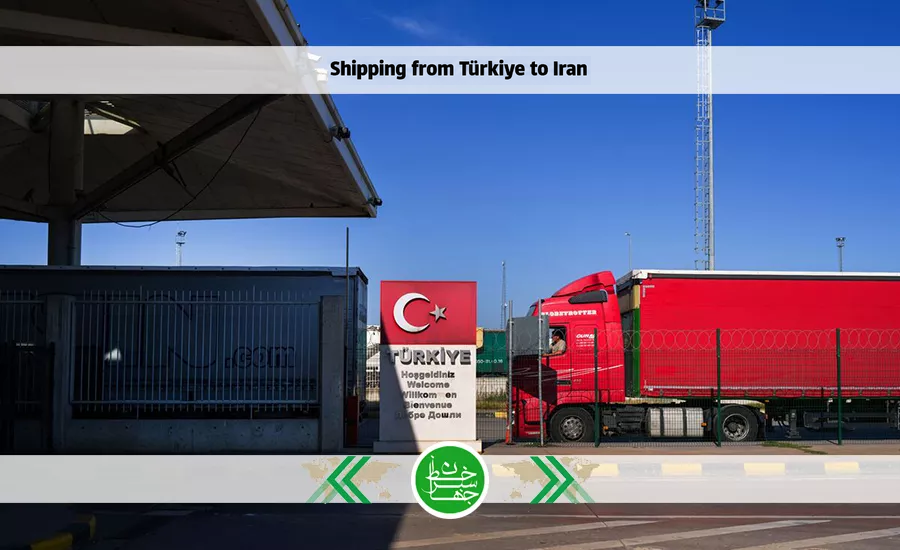
Cargo can travel from Türkiye to Iran via several routes. Knowing these options helps traders, importers and logistics teams choose a route that saves time and money and suits their shipment. The main options are outlined below.
- Road transit. Türkiye is a gateway from Europe to Asia and the Middle East. Its road network and international transit arrangements allow goods from Europe to move through Türkiye under the applicable customs transit procedure. The required transit declarations and controls still apply. World Green Line coordinates road transit services for these shipments.
Sea transit. Türkiye’s ports provide loading, unloading, storage and transfer services on major international shipping routes. They can be used for freight from South Korea to Iran, freight from China to Iran, and consignments from Hong Kong, Malaysia and other markets. A sea-to-road route through Türkiye may reach customs offices in northwestern Iran and can be faster or more economical for some cargo than routing via Bandar Abbas. Compare itineraries for your shipment.
Air transit. Several Turkish cities have well-equipped airports. Istanbul is an air transit gateway for commercial cargo bound for Iran, alongside hubs such as Dubai. The Persian reference highlights Atatürk historically. Confirm the current Istanbul airport and connecting flight for the shipment.
World Green Line uses its transit experience, facilities and local coordination to arrange the customs and onward transit steps for goods moving from Türkiye to Iran.
Main Turkish Customs Offices for Freight to Iran
Knowing which Turkish customs office handles the shipment helps when planning transit from Türkiye to Iran. The following offices serve different modes and routes.
- Erenköy customs office, road freight. Erenköy is an inland customs centre on the Asian side of Istanbul. Its road access and proximity to warehouses and logistics services support groupage and full-truckload shipments.
- Muratbey customs office, road freight. Muratbey is in the Çatalca area west of Istanbul. It is an important customs terminal for trucks on routes to Iran, including TIR operations and full truckloads (FTL). Its facilities and transit procedures support onward movement to border crossings such as Bazargan.
- Istanbul airport customs, air freight. Atatürk was formerly a major air cargo exit point. Most cargo operations moved to Istanbul Airport. Confirm which airport and customs office the selected carrier uses before dispatching goods.
- Mersin port customs, ocean freight. Mersin handles large and containerised shipments on Türkiye’s Mediterranean coast, including transit cargo from China, South Korea and Malaysia. Road connections toward the Iranian border support combined sea and road transport, which can help balance time and cost.
Imports from Türkiye to Iran
Imports from Türkiye to Iran are an important part of regional trade. Geographical proximity, strong economic ties, road, air and sea connections, and the variety of goods made in Türkiye make it a major source market for Iranian traders.
Steps for Importing Commercial Goods from Türkiye to Iran
The main steps for importing goods from Türkiye to Iran are as follows.
Step 1. Choose a reliable supplier
Choose a reputable seller and verify its business credentials before paying.
Step 2. Obtain a pro forma invoice
Ask the seller for a pro forma invoice before finalising the order or shipping the goods. It lists the product specifications, price, quantity, payment terms and shipping arrangements. It sets out the proposed terms before the final commercial invoice is issued.
Step 3. Estimate freight and clearance costs
Use the pro forma invoice to obtain estimates from international freight forwarders and customs brokers. Where a letter of credit (LC) or bank transfer is available and appropriate, the bank may use details from the pro forma invoice when preparing the payment arrangements.
Step 4. Check duties, charges and import restrictions
Importers may have to pay customs duties and other charges to clear goods in Iran. The applicable charges may include the following.
- Customs duty. The applicable tariff is assessed on the customs value, which may be based on cost, insurance and freight (CIF).
- Commercial profit levy. An additional charge may apply to certain goods.
- VAT and other fees. VAT, Red Crescent charges, standards fees and related costs vary by HS code, commodity and current rules. Verify the applicable amounts before shipping.
Some goods are restricted or prohibited for reasons such as the following.
- Religious or cultural restrictions. Examples include alcoholic beverages and prohibited content.
- Economic restrictions. Some categories, such as certain household appliances or clothing, may be restricted to protect domestic production.
- Health or safety restrictions. These may apply to unlicensed food products, certain medicines or goods that fail applicable standards.
- Used goods. Certain second-hand items may be prohibited or require specific authorisation.
Check the product’s import status through Iran’s Comprehensive Trade System or consult a qualified customs broker before buying or shipping.
Step 5. Obtain import approvals
A pro forma invoice is generally used when applying for order registration, health approval, standards approval or other permits that may be required for the goods.
Order registration is an important stage in the formal import process for goods subject to it.
- Import authorisation. Where registration is required, complete it before the goods enter the customs clearance process.
- Foreign exchange allocation. Registration may be needed when applying for foreign exchange through authorised channels.
- Coordination with regulators. Registration makes details about the goods, seller and buyer available to the relevant authorities, including the industry ministry, customs and standards bodies.
- Transparency and anti-smuggling controls. Registration helps authorities track imports and monitor compliance.
Where it applies, order registration is an early step before the remaining customs procedures.
Step 6. Use authorised payment channels
Arrange cross-border payments through authorised banks, licensed exchange providers or official systems as applicable. Check Central Bank of Iran instructions and applicable currency, tax and trade rules before transferring funds.
Points to check
- Check that the exchange provider is licensed by the Central Bank of Iran and can process the intended transfer.
- The provider may ask for an invoice, contract or order registration record.
- Confirm the exchange rate and fees with the authorised provider before committing.
- Informal or unauthorised transfers may expose you to financial losses or legal consequences.
Commercial Documents for Shipping Goods from Türkiye to Iran
Commercial invoice and packing list
The commercial invoice and packing list are key documents for customs clearance and calculating the applicable charges.
The commercial invoice identifies the buyer and seller and states the goods, value, quantities and agreed terms of payment and delivery. The packing list complements it with package counts, weights, dimensions and contents. Customs uses these records when identifying the goods and assessing their value and duties.
Missing documents or discrepancies can lead to clearance delays, penalties or return of the goods.
Documents that can hold up a shipment
Health, quarantine, standards and origin certificates can delay or stop clearance, or lead to the shipment being returned, if they are incomplete, inconsistent with Iranian rules or cannot be authenticated.
- Health certificate. Food, medicines, cosmetics and plant or animal products may require a certificate from a recognised authority. Customs or the relevant regulator may refuse clearance if the certificate or product fails the applicable requirements.
- Quarantine certificate. Plants, live animals, seeds, wood and some natural raw materials may need quarantine documentation. Goods found to carry contaminants, disease or pests may be held in quarantine or destroyed.
- Standards certificate. Electrical appliances, machinery, vehicle parts and other goods may be subject to compulsory standards. Clearance may be held if the products do not meet the relevant Iranian standards requirements.
- Certificate of origin. This document identifies the country of origin. A discrepancy with the invoice or a certificate from an unrecognised issuer can affect customs treatment or the duties assessed.
How to prevent delays
- Check before buying. Ask an experienced customs broker or the relevant authority which certificates are required before finalising the order.
- Buy from a reputable supplier. Sellers experienced in exporting to Iran are often better prepared to provide complete, valid paperwork.
- Check sample requirements for sensitive products. For food, cosmetics or medicines, ask the relevant food, drug or standards authority whether a sample or prior approval is required before the main consignment.
- Keep documents accurate and consistent. Match the information on the invoice and packing list and use English or Persian as required by the receiving authority.
- Use a qualified representative or customs broker. A professional can help prepare the paperwork accurately and resolve problems more quickly.
These steps reduce the risk of a customs hold or a returned shipment.
Freight from Türkiye to Iran with World Green Line
With several routes available, freight from Türkiye to Iran calls for a forwarder that understands international transport and customs. World Green Line draws on experience in road, air and ocean freight and on local coordination in Türkiye to support traders and importers with transit and customs procedures.
Call +98 21 8603 0397 or +98 21 8603 0308 to request a quote.
Frequently Asked Questions About Freight from Türkiye to Iran
- Road freight. Plan about 3–5 days for the main Istanbul–Tehran road movement by full truck, or around 6–9 days for road groupage under normal conditions. Pickup, border queues, clearance and final delivery can add time.
- Air freight. The total depends on the booked flight, cargo acceptance, connections and handling at origin and destination. Ask for the current schedule for your cargo.
- Ocean freight. The total depends on the confirmed sailing, transshipment, consolidation and port handling. Ask for an itinerary and an estimate for the actual ports and cargo.
Customs duty is assessed on the customs value under the applicable tariff. The customs value may be based on CIF. A separate commercial profit levy may apply to certain goods.
They can. Eligibility for any exemption depends on factors such as the nature, value and purpose of the goods and the applicable customs rules. Check before sending a gift or sample.
Confirm the current postal or courier limits and Iranian customs treatment before sending a parcel.
Weight. Check the maximum gross weight with the carrier for the selected service.
Dimensions. Check the carrier’s maximum parcel dimensions and how it calculates oversize limits.
Declared value. Check current customs duties and any applicable exemption with the operator and Iranian customs.
Restrictions can apply to the following categories.
- Goods restricted for religious or cultural reasons, such as alcoholic beverages or prohibited content.
- Goods restricted for economic reasons, including some appliances or clothing where controls apply.
- Goods restricted for health or safety reasons, such as unlicensed food products, certain medicines or non-compliant goods.
- Certain used goods, which may be prohibited or require specific authorisation.
The source lists Mahan Air, Qeshm Air, Aeroflot and Turkish Airlines. Verify the actual carrier, route and cargo acceptance at the time of booking.
Arrange Turkish export clearance with the seller or its authorised customs representative before dispatch. Responsibilities depend on the agreed terms of sale and applicable procedures. Prepare the Turkish customs declaration (beyanname), settle any applicable charges and have the necessary documents available at the office of exit. Missing paperwork can delay clearance or result in the goods being returned.
Ask for the supplier’s tax or company registration number. Verify it against the relevant chamber of commerce or official company register to confirm that the business is registered.

Consultation and Freight Quotes
World Green Line's freight specialists can help with your international shipping quote.


