


Freight from Italy to Iran has grown in popularity as commercial ties between the two countries have developed. The Persian reference describes Italy as a major European trading partner for Iran.
Shipping from Italy to Iran involves several steps. A freight forwarder with experience on this route can help coordinate them, protect your cargo and reduce the risk of delays.
World Green Line International Transport Company works with freight partners and advisers in Italy and Iran to help arrange shipments on this route.
Contact us or fill out the freight quote form for the cost of shipping from Italy to Iran. Our sales team will get back to you as soon as possible.
- World Green Line Freight Projects from Italy to Iran
- Request a Freight Quote from Italy
- What Are the Steps for Shipping from Italy to Iran?
- What Are the Shipping Methods from Italy to Iran?
- Air Freight from Italy to Iran
- Ocean Freight from Italy to Iran
- Road Freight from Italy to Iran
- Road Freight Methods from Italy to Iran
- How Much Does Road Freight from Italy to Iran Cost?
- What Affects Road Freight Costs from Italy to Iran?
- How Long Does Road Freight from Italy to Iran Take?
- Can You Shorten Road Freight Transit from Italy to Iran?
- What Can Delay Road Freight from Italy to Iran?
- What Are the Road Freight Routes from Italy to Iran?
- How Much Does Shipping from Italy to Iran Cost?
- Sending Parcels from Italy to Iran
- Imports from Italy
- Ship from Italy to Iran with World Green Line
- Frequently Asked Questions About Freight from Italy to Iran
World Green Line Freight Projects from Italy to Iran:
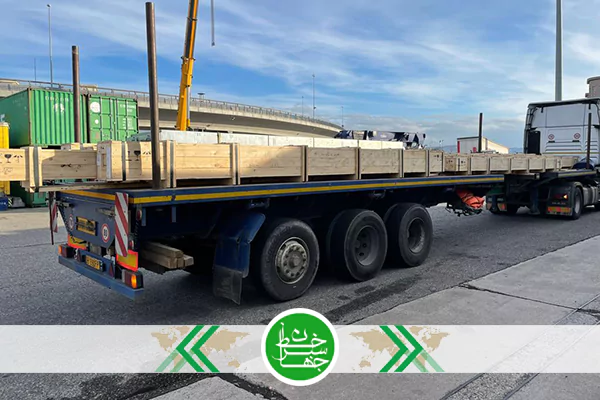
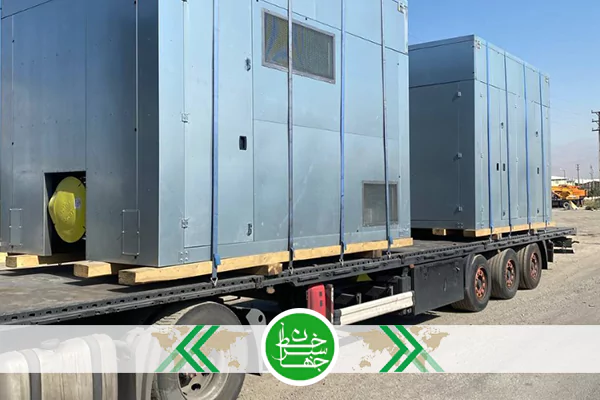
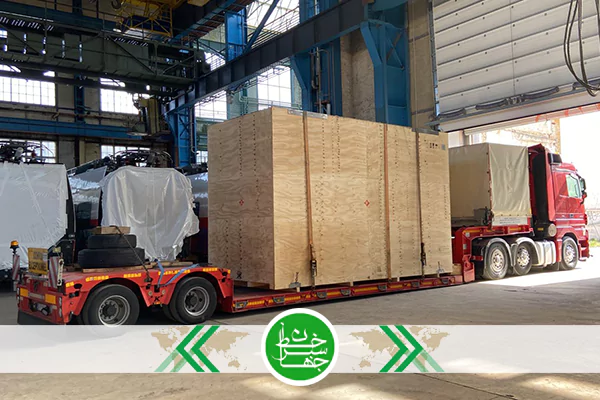
Request a Freight Quote from Italy:
You can request a freight quote from Italy at any time. Enter your shipment details, and our sales team will respond as soon as possible during business hours.
World Green Line offers online freight quotes to save you time. The Persian reference also describes a 3% discount on online orders. Confirm whether the promotion still applies before booking.
If you have trouble using the quote form, contact our support team.
"*" indicates required fields
What Are the Steps for Shipping from Italy to Iran?

Shipping from Italy to Iran involves several steps that help your cargo arrive safely and on time:
Step 1: Prepare Export and Import Documents and Book the Shipment
Identify the commodity, volume, weight, pickup address and destination customs office. Gather the commercial invoice, packing list, certificate of origin and other trade documents required on arrival. Share the relevant information with your forwarder and select sea, air or road transport. For other examples of the import process, see freight from China to Iran and freight from Germany to Iran.
Step 2: Pack the Cargo
Choose packaging suited to the cargo, its value and the transport method. Suitable packing reduces the risk of damage in transit.
Step 3: Complete Export Customs Formalities in Italy
The seller supplies the necessary export information to the forwarder or customs representative so they can arrange export clearance in Italy and obtain the required export documentation.
Step 4: Ship the Cargo
After export clearance, the freight leaves Italy. Ocean cargo can travel from ports such as Genoa to southern Iranian ports such as Bandar Abbas. Air cargo can travel from Milan or Rome to Imam Khomeini International Airport. Road shipments may cross Eastern Europe or use ferry connections from ports such as Trieste or Bari. They continue via freight from Turkey to Iran, cross at Bazargan and unload at the destination customs office.
Step 5: Clear the Cargo in Iran
After arrival and unloading, submit the transport document, commercial invoice, packing list, certificate of origin and any required import permits to customs, and pay applicable duties and charges. Door-to-door service can help coordinate the customs process and final delivery.
Step 6: Arrange Final Delivery
After customs releases the cargo, arrange inland transport to the final address in Iran.
What Are the Shipping Methods from Italy to Iran?
Several shipping methods are available from Italy to Iran. The most economical choice depends on your goods and circumstances. The comparison below explains the options and what to consider when choosing one.
Features | Ocean | Air | Road | Multimodal | Postal | Oversized Cargo |
|---|---|---|---|---|---|---|
Reference Transit Time | About 40–50 days | About 7 days | About 17–30 days | About 15–40 days | About 7–20 days | About 30–50 days |
Relative Cost | Low | High | Moderate | Moderate | Variable | Variable |
Best Suited To | Bulky and heavy cargo | Valuable and sensitive goods | Mid-sized shipments | Mid-sized and bulky shipments | Small parcels and documents | Bulky and heavy cargo |
Benefits | Economical freight cost | Fastest method | Greater control over cargo | Balance of speed and cost | Simple and fast process | Can carry oversized shipments |
Limitations | Longer transit time | Higher cost | Depends on the geography and route | Risk of cargo damage | Weight and size limits | Requires careful handling and safety planning |
Method 1: Ocean Freight
Ocean freight is a common and economical option from Italy to Iran. It suits bulky and heavy shipments with flexible delivery dates.
Transit Time:
The Persian reference estimates roughly 40–50 days from vessel departure to Bandar Abbas, depending on the service and season. This estimate assumes ordinary operating conditions. Weather and disruptions on international shipping routes can change it.
The source describes indirect ocean services from Italy to Iran via Jebel Ali in the UAE. Time spent waiting for an onward connection at Jebel Ali affects the overall transit.
The source estimates about 30–40 days if a direct sailing without an intermediate stop is available. Check the current itinerary and sailing schedule with the forwarder before booking.
Benefits:
- Lower cost than other transport methods
- Can carry bulky and heavy cargo
Limitations:
- Longer transit than other shipping methods
- Higher port and customs charges
Method 2: Air Freight
Air freight is the fastest way to send cargo from Italy to Iran. It is suited to high-value and time-sensitive goods.
Transit Time:
Transit from Milan to Tehran depends on several factors. At the time of the Persian reference, Iranian carriers such as Mahan Air and Iran Air were not flying from Italy, and a direct Iran Airtour service from Milan was anticipated. Iran Air previously flew from Milan to Tehran once a week, with a flight time of about six hours. Including customs formalities, the previous Iran Air service took an estimated two to three days. Because of limited departures, shippers often had to wait a week for cargo space.
Before planning an air shipment from Italy to Iran, ask World Green Line’s sales team to confirm the availability of direct flights with Iranian carriers.
The Persian reference also describes Qatar Airways cargo service from Milan to Tehran via Doha, with an estimated five to seven days including customs formalities. It describes this service as daily. Allowing for space and departure frequency, the reference gives roughly seven days for either option. Confirm current schedules and space before booking.
Benefits:
- Fastest method
- Suitable for high-value and sensitive goods
Limitations:
- Higher cost
- Cargo size and weight restrictions
Method 3: Road Freight
Road freight is another way to ship from Italy to Iran and is often combined with ocean or air freight. International road transit runs through Türkiye and Eastern European countries.
Transit Time:
Road transit depends on the carrier and the service. The Persian reference estimates 15–18 days for a full truckload and 27–35 days for groupage.
Benefits:
- Suitable for medium-sized shipments
Limitations:
- Dependent on the geography and policies of transit countries
Method 4: Multimodal Transport
Multimodal freight combines transport modes to reduce costs and improve efficiency. It is commonly used for long routes and bulky cargo. When airline restrictions prevent direct carriage to Iran, cargo may be routed through third countries, subject to applicable requirements.
Transit Time:
Depending on the modes used, the Persian reference estimates 15–40 days for multimodal freight from Italy to Iran.
Benefits:
- A balance of speed and cost
- Flexibility to choose modes that suit the shipment
Limitations:
- Risk of damage from repeated unloading and reloading between modes
Method 5: Courier and Express Shipping
Postal shipping is suitable for small parcels, documents and samples. It offers a simple, fast process, with clearance requirements depending on the item and service.
Transit Time:
The Persian reference estimates 15–30 days for regular post, 3–7 days for express post and 2–5 days for private courier services. It also notes that restrictions have led to longer transit on the Italy–Iran route.
Benefits:
- Suitable for small parcels and documents
- Simple, fast dispatch process
Limitations:
- Parcel size and weight limits
- High cost for heavy shipments
Method 6: Oversized Cargo
Oversized freight covers shipments whose dimensions or weight exceed standard limits and which cannot be carried on ordinary trailers.
Oversized cargo can be moved by sea or road from Italy to Iran. The freight company assesses the feasible method based on the cargo.
Transit Time:
The Persian reference allows an additional 15–35 days compared with ordinary cargo. The actual time depends on the weight, dimensions and extent to which the load exceeds standard limits.
Benefits:
- Transport for heavy, oversized cargo
Limitations:
- Requires careful handling and strict safety precautions
The best shipping method depends on the cargo, delivery window and budget. Contact World Green Line’s international freight team for advice on the options for your shipment.
Air Freight from Italy to Iran
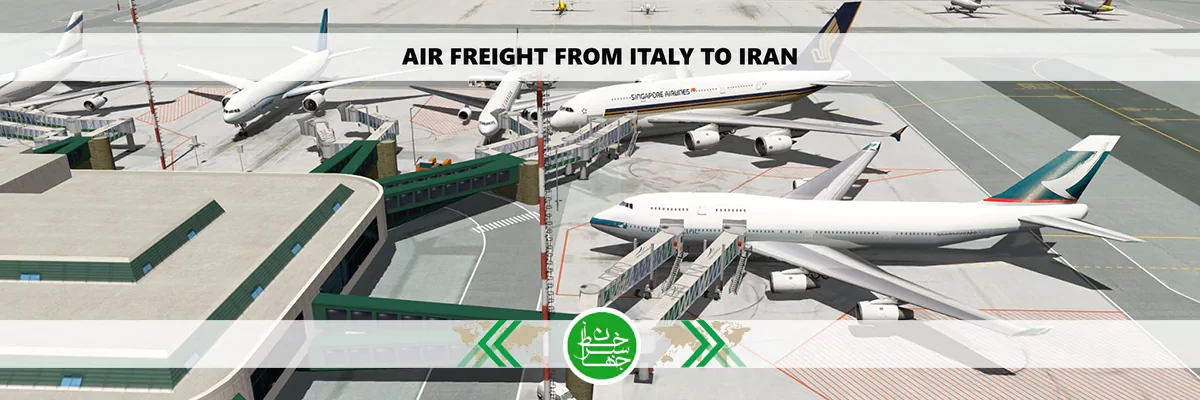
Air freight is a major option for commercial, industrial and sensitive cargo from Italy to Iran. Its benefits include fast transit, greater security and standardised customs procedures.
World Green Line specialises in international air freight from Italy to Iran and plans the shipment for timely delivery and safe handling.
What Are the Steps in Air Freight from Italy to Iran?
Step 1: Book the Shipment and Review the Cargo
Choose a reputable international freight company and book your shipment. The company reviews the cargo specifications, flight options and documents.
- Cargo specifications include gross and net weight, exact package dimensions for calculating volumetric weight, cargo type (general, sensitive, perishable, dangerous or high-value) and any requirements for temperature control, special packaging or dedicated insurance.
- Flight options include direct flights, which are generally faster and more expensive, and connecting flights, which may take longer at a lower cost.
- Required documents include the commercial invoice, packing list, export permits and relevant certificates.
Step 2: Pack the Cargo
Pack cargo for air freight in line with international standards and the requirements of the goods to limit damage in transit. Label the packages with shipment details after packing.
- Use wooden packaging and internal foam for fragile goods.
- Use antistatic packaging for sensitive electronics.
- Use temperature-controlled air cargo containers for perishable goods.
- Package and label dangerous goods in accordance with applicable IATA Dangerous Goods Regulations.
Step 3: Transport the Cargo
After packing, the cargo moves from the shipper’s warehouse to the airport cargo terminal in Italy. Export formalities include reviewing the documents, inspecting the cargo and recording the shipment in Italian customs systems. Once released, the cargo moves to the airline warehouse for departure.
Step 4: Issue the Air Waybill (AWB)
The freight company issues the air waybill under IATA standards. It includes the shipper and consignee names, cargo details (weight, dimensions and package count), flight number, airline, freight terms and charges.
Step 5: Unload at Imam Khomeini International Airport (IKA)
The cargo is unloaded at the airport cargo terminal after arrival. Customs reviews the documents and inspects the shipment. Goods may also undergo quality, health or safety checks when required.
Step 6: Clear Customs
Submit the air waybill, commercial invoice, packing list and any required permits, then pay the applicable duties and charges. After customs clearance, a local carrier can deliver the goods to the requested destination.
Which Airlines Can Carry Freight from Italy to Iran?
Iran Air historically offered air cargo services from Milan and Rome to Tehran. The Persian reference records the suspension of these services following restrictions in effect at the time.
The Persian reference lists Qatar Airways, Lufthansa and Emirates as alternatives for air cargo from Milan to Tehran. Check route and cargo acceptance for the planned shipment.
The reference lists Qatar Airways and Lufthansa for shipments from Rome to Tehran and notes that Iran Air’s Rome service had been cancelled at the time.
Which Italian Airports Handle Freight to Iran?
World Green Line’s air shipments from Italy to Iran are primarily routed through Milan and Rome.
Milan is served by three international airports: Malpensa, Linate and Bergamo. Most international flights use Malpensa, approximately 45 km from Milan.
Airport | IATA Code | Location | Annual Cargo Capacity | Specialist Cargo | Distinctive Facilities | Strengths for Shipping to Iran |
|---|---|---|---|---|---|---|
Malpensa | MXP | Milan, northern Italy | Over 500,000 tonnes | Industrial goods, heavy machinery and electronics | Two equipped cargo terminals, oversized and heavy cargo handling, and specialist services for sensitive goods | Well suited to large commercial shipments to Iran at competitive rates |
Linate | LIN | Milan, northern Italy | About 10,000 tonnes | Small parcels, trade samples and important documents | Rapid clearance of small consignments, with urgent dispatch in under 24 hours where available | Suitable for urgent, small-volume shipments |
Bergamo (Orio al Serio) | BGY | Bergamo, near Milan | Over 120,000 tonnes | Consumer goods, fashion, clothing and vehicle parts | A low-cost European cargo hub with strong road connections | A cost-effective option for medium-sized shipments to Iran with reasonable transit times |
Fiumicino (FCO) | FCO | Rome, central Italy | Over 200,000 tonnes | Pharmaceuticals, food and luxury goods | Temperature-controlled and pharmaceutical handling and VIP services for valuable cargo | Suited to sensitive and high-value shipments to Iran |
Use the table to select an airport for air freight from Italy to Iran. Linate (LIN) is suited to urgent small shipments, Malpensa (MXP) to large commercial cargo, Bergamo (BGY) to cost-conscious shipments, and Fiumicino (FCO) to sensitive or high-value goods. World Green Line can help you select an airport for your shipment.
Air Freight from Milan, Italy’s Financial and Commercial Hub
Air freight from Milan Malpensa (MXP) is one of the quickest and safest methods of shipping from Italy to Iran. Milan is a major European economic and industrial hub and plays an important role in international trade. Its position in northern Italy and advanced transport infrastructure make it a gateway for imports and exports. The advantages of shipping from Milan include:
- Modern cargo handling facilities
Advanced warehouses, temperature control, equipment for heavy and sensitive cargo and specialist logistics services support fast, safe shipments from Milan.
- Extensive flight network
The Persian reference describes direct and connecting options through Malpensa for fast shipping to Iran. Confirm the current routing and availability before booking.
- Handling for different types of cargo
Industrial machinery, medical equipment, clothing from major brands and luxury goods can all be shipped securely by air from Milan to Iran, subject to acceptance.
- Fast and reliable transport
Air freight from Milan is the fastest shipping mode from Italy to Iran and suits time-sensitive goods.
- Efficient customs procedures
Milan’s airports use established customs procedures to help clear shipments quickly.
Ocean Freight from Italy to Iran
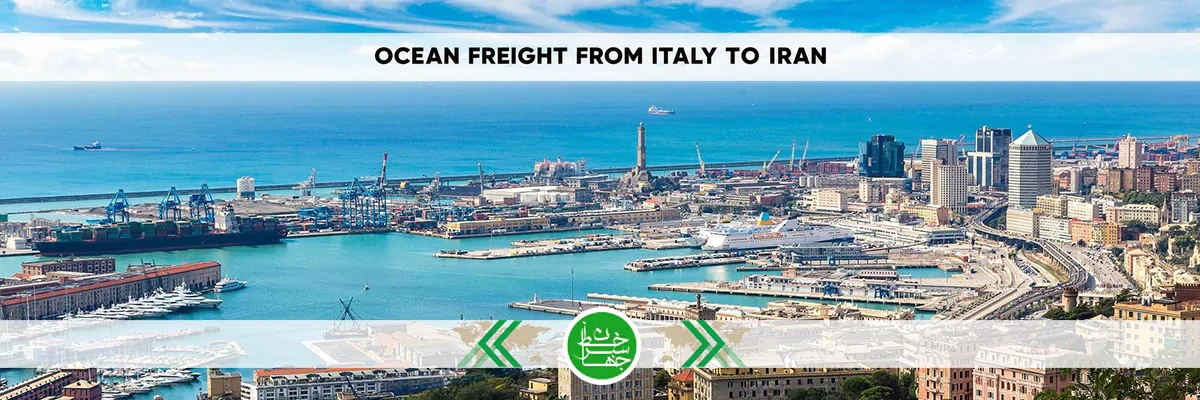
World Green Line arranges ocean freight from Italy to Iran through several ports.
Italy’s coastline lies along the Mediterranean. The Suez Canal connects the Mediterranean to the Red Sea and Gulf of Aden, providing a route towards the southern shores of the Persian Gulf.
Trieste, near Venice in the northeast, is a major Italian port. Genoa, on the northwestern coast, is the main port cited in the Persian reference for ocean freight from Italy to Bandar Abbas.
The Persian reference notes that Iranian vessels were not serving this route at the time, while private carriers offered Genoa–Bandar Abbas container services, often via Jebel Ali in the UAE. It also mentions occasional direct services from Italy with the Italian shipping line Messina. Confirm current service before booking.
Road Freight from Italy to Iran
Road freight from Italy, particularly Milan, benefits from longstanding trade between the two countries and the experience of Italian international carriers on the route to Tehran.
Italy, and metropolitan Milan in particular, is a major road freight gateway from Europe to Iran.
The route may change during the year and with the cargo type. Carriers may send trailers from Trieste or Bari to Mersin, Pendik or Istanbul in Türkiye before continuing to Iran. Another option is to cross into Türkiye via Bulgarian checkpoints such as Kapitan Andreevo or Lesovo.
Road Freight Options from Italy to Iran
Road freight can carry commercial, industrial and personal goods, from light consignments to heavy loads.
- Full Truckload (FTL)
A whole truck is allocated to one shipper for a large or dedicated shipment. FTL is suitable for cargo requiring direct transport without intermediate stops. Direct and indirect FTL options may be available depending on the shipper’s needs and budget.
- Groupage or Less Than Truckload (LTL)
Groupage suits smaller shipments. Your cargo is consolidated with other consignments and dispatched once the truck is full.
How Much Does Road Freight from Italy to Iran Cost?
Road freight from Italy to Iran is priced in two ways:
- Groupage (LTL): The charge depends on shipment volume and weight. The Persian reference quotes approximately €350–€400 per cubic metre for summer 1403 (2024).
- Full truckload (FTL): The charge is based on hiring the entire vehicle. The Persian reference quotes about €6,000 per truck for summer 1403 (2024).
Contact World Green Line for a current quote.
What Affects Road Freight Costs from Italy to Iran?
The cost of road freight from Italy to Iran depends on:
- Route and distance
The route, transit countries and distance between origin and destination affect the cost.
- Nature of the goods
Sensitive, perishable or dangerous goods may require specialist equipment, which can raise the cost.
- Type of truck
The choice of a standard, specialist or refrigerated truck for temperature-sensitive cargo affects the cost.
- Weight and volume
Groupage is priced by cubic metre (CBM) or loading metre (LDM), as agreed. The reference uses 200 kg as the chargeable weight equivalent of one cubic metre. LDM is based on the truck’s loading length. FTL is priced per dedicated truck.
- Customs charges and taxes
Charges in Italy and Iran affect the total. These may include EX1 export declaration charges at origin and customs and warehouse charges at destination.
- Cargo insurance
Insurance can be a significant share of transport costs, depending on the value of the cargo. The cargo owner should arrange the policy.
- Terms agreed with the seller
The terms agreed with the seller affect the cost. Under FCA, the reference assigns the EX1 cost to the seller. Under EXW, the cargo owner pays it to the freight forwarder. The reference gives an indicative charge of €100–€150. Confirm the applicable terms and current charge for your shipment.
How Long Does Road Freight from Italy to Iran Take?
Road transit depends on several factors. The Persian reference gives an overall estimate of 17–30 days.
It estimates 15–18 days for full truckload and 27–35 days for groupage.
Can You Shorten Road Freight Transit from Italy to Iran?
Reducing road transit time may involve extra charges or specialist services. Options include:
- Use multimodal transport
Combining modes may shorten transit, particularly where a more efficient route is available.
- Choose efficient routes
More direct, less congested routes and transit countries with faster customs procedures can reduce transit time.
- Arrange faster customs clearance
Some freight companies can shorten transit by completing customs procedures more quickly.
- Check and pack the goods properly
Properly packed goods that do not require special permits or lengthy inspections tend to clear more quickly.
- Choose a reputable freight company
A reputable international freight company with fast, reliable service can shorten road transit from Italy.
- Pay for express service
Some freight companies charge extra for express transport. The reference indicates that this could shorten transit by 10–15 days.
- Coordinate and plan ahead
Close coordination with the carrier and choosing the right time to ship can shorten road transit from Italy to Iran.
What Can Delay Road Freight from Italy to Iran?
Weather, customs requirements, border disruptions and road congestion can cause delays.
What Are the Road Freight Routes from Italy to Iran?
Road freight from Italy to Iran uses two main routes. They cross different European and Asian countries and have distinct advantages and disadvantages.
Route | Transit Countries | Reference Transit Time | Benefits | Limitations |
|---|---|---|---|---|
Northern Route | Italy → Slovenia → Croatia → Serbia → Bulgaria → Türkiye → Iran | 12–18 days | Standard route, suitable for commercial cargo, with good security | Relatively high transit costs and possible delays at the Turkish border |
Trieste and Bari Sea–Road Route | Italy by road → Trieste or Bari by sea → Pendik, Türkiye by road → Iran | 15–25 days | Suitable for bulky or heavy cargo, with lower road costs and less vehicle wear | Longer transit, dependence on sailing schedules and possible port and customs delays in Türkiye |
- Northern Route
The northern route passes through Italy, Slovenia, Croatia, Serbia, Bulgaria and Türkiye before reaching Iran. The reference estimates 12–18 working days.
This is a standard, practical route for commercial cargo, with good security and access to an extensive European transport network.
Drawbacks include relatively high transit tolls and taxes and possible customs delays at the Turkish border.
- Trieste and Bari Sea–Road Route
Cargo travels from Italy to Türkiye by sea and continues to Iran by road. The reference estimates 15–25 working days.
This route suits bulky or heavy cargo. It can reduce European road transit costs and truck wear while improving cargo security.
Drawbacks include a longer transit than fully overland routes, reliance on sailing schedules and possible port and customs delays in Türkiye.

How Much Does Shipping from Italy to Iran Cost?
Shipping costs depend on the mode, cargo weight and volume, origin, destination and prevailing market rates. The following sections compare ocean, air and road freight costs.
- Ocean Freight Costs from Italy to Iran
Ocean freight costs depend on container type and departure port. Genoa is the usual port named in the Persian reference.
Historical Ocean Freight Rates from Italy to Bandar Abbas — Summer 1403 (2024) | ||||
|---|---|---|---|---|
Per 20-foot container | €2,900 | |||
Per 40-foot container | €4,000 | |||
Contact World Green Line’s sales team for current rates.
- Air Freight Costs from Italy to Iran
The historical rates below use Milan as the origin and Tehran as the destination. The reference cites Iran Air’s historical service. Confirm current carrier availability before booking.
Historical Air Freight Rates from Milan to Tehran — Summer 1403 (2024) | |||||||
|---|---|---|---|---|---|---|---|
Weight in Kilograms | M | N | 45+ | 100+ | 250+ | 500+ | 1000+ |
Price per Kilogram in Euros | 195 | 7.70 | 6.25 | 5.55 | 4.95 | 4.55 | 3.95 |
Contact World Green Line’s sales team for current rates.
- Road Freight Costs from Italy to Iran
Road freight offers a cost-effective balance. It generally costs less than air freight and takes less time than ocean freight.
Historical Road Freight Rates from Italy to Iran — Summer 1403 (2024) | ||||
|---|---|---|---|---|
Groupage freight | €350–€400 per cubic metre | |||
Full truckload freight | €6,000 per truck | |||
Contact World Green Line’s sales team for current rates.
Sending Parcels from Italy to Iran
Postal and courier services suit small goods, documents, trade samples and personal gifts. This section covers the available options, costs and key considerations.
What Parcel Shipping Services Are Available from Italy to Iran?
Parcels can travel directly or via an intermediate airport. The two methods have different advantages.
- Direct service
Parcels from across Italy and Europe are consolidated under one waybill at Milan Malpensa and sent directly to Iran. This option is relatively expensive, but avoids transit charges via Dubai or Türkiye and gets parcels to Imam Khomeini International Airport as quickly as possible when the service is available.
- Indirect service
The Persian reference describes international carriers such as DHL and UPS carrying parcels to an intermediate airport such as Dubai (DXB), followed by onward transport to Iran. This can be cost-effective at lower weights. Depending on the intermediary’s policy, the consignee may pay a UAE re-export charge calculated as a percentage of the seller’s invoice value. This can make indirect service expensive for high-value goods. Confirm current service and cargo eligibility before dispatch.
What to Check Before Sending a Parcel from Italy to Iran
- Customs restrictions
Check applicable Iranian customs requirements before sending a parcel. Some goods are subject to restrictions.
- Protective packaging
Use strong, protective packaging, especially for sensitive or fragile goods.
- Parcel insurance
Consider insurance, especially for valuable goods, to cover loss or damage under the terms of the policy.
- Tracking number
Obtain a tracking number to check the parcel’s progress online from origin to destination.
- Delivery time
Customs conditions and public holidays in either country can affect delivery.
Imports from Italy
Imports from Italy are an important part of trade between the two countries. The Persian reference describes Italy as the world’s ninth-largest economy by GDP and highlights metalworking, machinery, chemicals, vehicles, food, textiles and clothing, petrochemicals and electrical products. These industries contribute to Italy’s role as a supplier to Iran.
This section outlines the import process and lists goods imported from Italy.
How to Import Goods from Italy
Importing goods from Italy involves the following steps:
Step 1: Select the Goods and a Reliable Supplier
Choose the goods you want to import and a reliable supplier.
Check whether the goods meet Iran’s national standards and can enter the Iranian market. Some goods may require permits from bodies such as the standards authority, the Ministry of Health or the Food and Drug Administration. Other goods may be restricted. Check the applicable international and domestic requirements for the shipment.
Choose a supplier who can provide valid commercial documents. Then negotiate the terms of sale, price, transport and payment.
Step 2: Draw Up the Contract and Prepare Commercial Documents
The commercial invoice, packing list and certificate of origin are important for imports from Italy and may be needed for customs clearance.
Before importing, complete the applicable import order registration through the Ministry of Industry, Mine and Trade’s order registration system.
Step 3: Choose the Transport Mode
Ocean, air and road services are available for Italy–Iran shipments. Choose based on the type of goods, delivery window and cost.
Step 4: Arrange Cargo Insurance
Cargo insurance can cover eligible loss or damage during transport from Italy to Iran.
Step 5: Clear the Goods Through Iranian Customs
After arrival, submit the commercial documents, pay applicable customs duties and taxes, and complete any required inspections.
Goods Imported from Italy
The Iran–Italy Joint Chamber figures cited in the Persian reference list the following categories of industrial and consumer goods imported from Italy in January–June 2024:

Nuclear reactors, boilers, mechanical appliances and machinery

Electrical machinery, sound recording and reproducing equipment, television equipment and related goods

Dyeing or tanning extracts, tannins and derivatives, dyes and pigments

Ceramic products

Optical, photographic, cinematographic, measuring, precision, medical or surgical instruments and related goods

Vehicles other than railway or tramway rolling stock, and their accessories

Miscellaneous chemical products

Fertilisers

Pharmaceutical products

Plastics and articles of plastics

Organic chemicals

Articles of iron or steel
Ship from Italy to Iran with World Green Line
Shipping from Italy to Iran is an important opportunity for businesses and requires understanding the available methods, costs and applicable rules. World Green Line provides specialist freight and customs clearance support.
Call +98 21 8603 0397 or +98 21 8603 0308 today for a quote.
Frequently Asked Questions about Shipping from Italy to Iran
Yes. Small consignments can be shipped by ocean or road groupage.
Yes. You can arrange cargo insurance to protect your shipment under the terms of the policy.
Typical documents include the purchase invoice, packing list, certificate of origin, transport document and other customs documents required for the goods.
Yes. Goods entering Iran are subject to Iranian customs requirements. Check the applicable restrictions and prohibitions before shipping.
Yes. Postal services and international freight companies can carry gifts and personal parcels where customs requirements allow.
Yes. Many international freight companies provide tracking numbers so customers can check the status of shipments online.
Yes. Goods such as hazardous chemicals and explosives are subject to restrictions. Check the applicable requirements before dispatch.

Freight Advice and Rate Enquiries
World Green Line’s international freight team can advise on your shipment and provide a quote.


