


Freight from Germany to Iran is an important international transport route. Given the volume of trade between the two countries, choosing a suitable shipping method matters.
World Green Line International Transport Company works with European freight partners to arrange shipments from Germany to Iran. We organise collection from locations including Berlin, Hamburg and Frankfurt and plan the route around your budget and delivery requirements.
Our specialists can advise on commercial or personal shipments and help you choose between air, road and ocean freight.
Contact us or complete the freight quote form to request a rate for your shipment from Germany to Iran. Our team will follow up with you.
Despite tighter trade relations in recent years, freight from Germany remains a concern for Iranian importers. Germany has historically been a source of industrial goods, pharmaceuticals and production lines. Long-standing commercial relationships and trust in European manufacturers, particularly German suppliers, have helped shape the logistics network between the two countries.
This guide explains the shipping methods, steps and cost factors for freight from Germany to Iran so you can choose an option that suits your shipment.
- World Green Line Freight Projects from Germany to Iran
- Request a Freight Quote from Germany
- What Are the Steps for Shipping from Germany to Iran?
- What Shipping Methods Are Available from Germany to Iran?
- Air Freight from Germany to Iran
- Road Freight from Germany to Iran
- Ocean Freight from Germany to Iran
- Groupage Freight from Germany to Iran
- Excess Baggage from Germany
- Sending Parcels from Germany to Iran
- Choosing a Shipping Method from Germany to Iran
- How Much Does Shipping from Germany to Iran Cost?
- Ship from Germany to Iran with World Green Line
- Frequently Asked Questions About Shipping from Germany to Iran
World Green Line Freight Projects from Germany to Iran

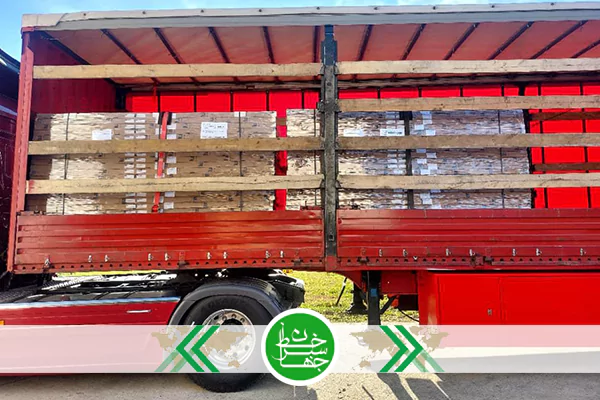
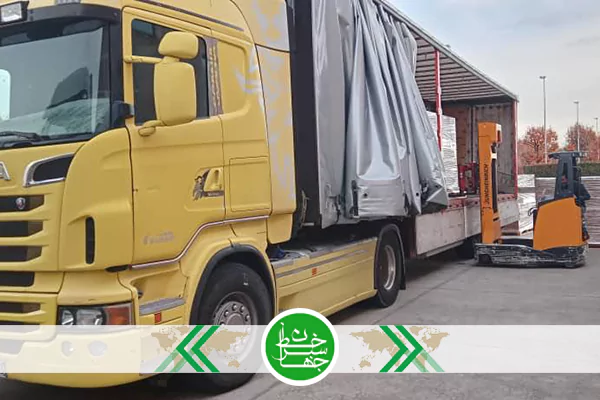
Request a Freight Quote from Germany
You can request a Germany-to-Iran freight quote at any time. Enter your shipment details and our sales team will respond during business hours.
World Green Line offers an online quote form to save you time. The reference lists a 3% discount for online bookings. Ask our team whether the offer applies to your shipment.
If you need help using the Germany-to-Iran quote form, contact our support team.
"*" indicates required fields
What Are the Steps for Shipping from Germany to Iran?
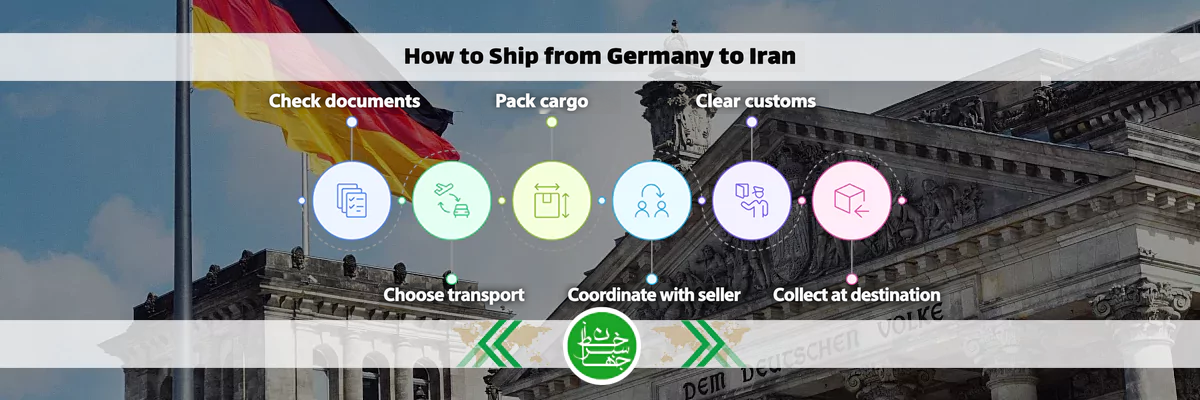
The steps for shipping from Germany to Iran vary by cargo, shipper, consignee and commercial arrangement. Freight from China to Iran and freight from Italy to Iran each have their own requirements. For exports from Germany, identify the goods by HS code and confirm whether the shipment is permitted under applicable EU and German export controls. Germany’s Federal Office for Economic Affairs and Export Control (BAFA) is the relevant authority for export controls. The steps below outline what an importer should plan for.
Step 1: Check the Documents Required for Import into Iran
Before shipping goods from Germany, confirm whether the shipment requires valid import order registration and any permits in Iran. The guide to freight from Türkiye to Iran describes related considerations on another route. Deciding how to import the goods after loading can lead to delays or costs, particularly if the buyer or intermediary has yet to complete the registration.
Step 2: Choose the Transport Method
Consider the nature, weight and dimensions of the cargo, when it will be ready in Germany, the urgency of delivery and your freight budget.
Step 3: Pack the Cargo Correctly
Use packaging suited to the goods and transport method. Air shipments must meet the carrier’s packaging and acceptance requirements. For ocean or road freight, allow for the nature of the goods and whether the packages can be stacked.
Step 4: Arrange Export Documents with the Seller
Coordinate the commercial invoice, packing list, export declaration (often referred to as EX1) and any required certificate of origin with the seller. Complete and accurate paperwork gives the freight forwarder the information it needs to arrange the shipment.
Step 5: Complete Customs Procedures
If the shipper arranges the export declaration, the seller provides it to the freight company. The goods then complete EU export procedures, including sealing where required, before leaving by air, sea or road. If the seller cannot arrange the declaration, an authorised intermediary may handle customs formalities under a power of attorney.
Step 6: Collect the Cargo at Destination
Once the shipment arrives, the consignee collects the goods at the agreed customs terminal.
What Shipping Methods Are Available from Germany to Iran?
Freight from Germany to Iran can travel by air, road, ocean or courier. Each option suits different shipments.
- Air Freight
Air freight is generally the fastest and usually costs more than other modes. The reference describes delivery through Imam Khomeini International Airport customs. Available departure airports depend on the carrier’s direct or connecting services and its acceptance of the shipment.
- Road Freight
Road freight travels through transit countries such as Türkiye. It usually costs less than air freight and transit time varies between full truckload (FTL) and groupage (LTL). It can also serve many customs terminals that handle TIR traffic.
- Ocean Freight
Ocean freight can depart from ports such as Hamburg. Container or bulk shipping suits large or heavy consignments. The lower freight cost can make it practical for shipments whose final destination is in southern Iran.
- Courier Shipping
Courier shipping typically suits documents and small parcels. Depending on the service and cargo, shipments may travel directly or via the UAE. Confirm the transit estimate when booking.
Air Freight from Germany to Iran
Air freight is generally the fastest mode. German airports considered for this route include Frankfurt (FRA), Munich (MUC) and Berlin Brandenburg (BER).
Air freight suits goods that need fast delivery, including perishables, pharmaceuticals, production-line parts and valuable or sensitive items. It also suits contracts that specify Imam Khomeini International Airport (IKA) as the delivery point.
The reference mentions past services by Iran Air and Mahan Air and cites Qatar Airways (QR) as a connecting option to IKA. Confirm the available carrier and route before booking. Passenger aircraft on the connecting leg may be unable to carry bulky cargo that requires a freighter.
A local truck or van typically collects the goods from the factory and delivers them to the airline’s cargo warehouse.
Advantages
- Fast transit
- Suitable for valuable cargo that needs careful handling
- Shipment tracking through the airline’s website
Disadvantages
- Higher freight cost
- Limits on shipment weight and volume
Road Freight from Germany to Iran
Road freight can handle a wide range of cargo types, sizes and weights. It can be economical, with transit depending in part on whether you book a dedicated truck or share space with other shipments.
The reference describes routes through Bulgaria or Italy and onward through Türkiye. The Italian route can use a ferry from Bari or Trieste to Pendik. The Bulgarian route can enter Türkiye through Kapitan Andreevo or Lesovo, with onward entry into Iran through Bazargan. Confirm the routing and border crossings for each shipment.
For a full truckload, the truck collects the goods at the loading point. It proceeds to the agreed customs office for export formalities and sealing before leaving through the agreed exit point.
Advantages
- Lower cost than air freight
- Suitable for heavy and bulky cargo
- Can deliver to many customs terminals in Iran
Disadvantages
- Longer transit than air freight
- Road conditions can affect transit and cargo handling
Ocean Freight from Germany to Iran
Ocean freight commonly uses Hamburg. The parties may instead agree on a port in Italy, the Netherlands or Belgium as the EU port of departure.
Ocean freight suits bulky and heavy consignments and shipments destined for southern Iran, including cargo for petrochemical and polymer businesses.
Ocean freight is an established option for carrying heavy cargo. It typically takes longer than the other modes.
A container may be delivered to the seller for loading and then taken to the origin port. Alternatively, an inland leg known as pre-carriage takes the goods to a depot before they continue to the port of departure.
Major German Ports
- Hamburg: Germany’s largest seaport and a major European gateway for ocean freight.
- Rostock: Another German port used for international shipping.
Advantages
- Lower freight cost for heavy cargo
- Suitable for large consignments
Disadvantages
- Longer transit time
- More coordination for cargo delivery
Groupage Freight from Germany to Iran
Smaller consignments can share a truck or container with other cargo. In road freight this is called less-than-truckload (LTL). In ocean freight, consignments that do not fill a 20- or 40-foot container can ship as less-than-container-load (LCL).
Advantages
- Lower cost for small shipments
- Local German hauliers can arrange collection
Disadvantages
- Longer transit because of consolidation
- Less suitable for sensitive goods
- Some dangerous goods may be excluded
Excess Baggage from Germany
The Iranian community in Germany generates demand for sending personal effects, souvenirs, gifts and other light non-commercial items to Iran. See our excess baggage guide for how these shipments work and what to prepare. Contact us to discuss which service fits your belongings.
Sending Parcels from Germany to Iran
Courier shipping is useful for small packages, important documents and low-volume commercial consignments that need quick delivery.
Depending on carrier acceptance and applicable rules, parcels may travel directly from Germany or via another origin such as Italy. Some services route shipments through the UAE. If a UAE intermediary is involved, ask the carrier how to issue the transport documents and identify the parties accurately for customs.
Choosing a Shipping Method from Germany to Iran
The best option depends on the goods, volume, deadline and budget. Air freight suits urgent or valuable shipments. Road or ocean freight may cost less for heavy or bulky goods. Share your shipment details with World Green Line so the team can compare the available options.
How Much Does Shipping from Germany to Iran Cost?
The cost of shipping from Germany to Iran depends on the mode, cargo weight and dimensions, and delivery requirements. Air freight generally costs more than road or ocean freight.
The Persian reference gives examples of EUR 7 per kg for a 200 kg air shipment, excluding local charges in Germany, and EUR 6,800 for a full truck from Frankfurt to Shahriar Customs in Tehran. These are historical examples. Actual charges depend on the carrier, season and shipment details.
The reference also gives an example of EUR 550 for 750 kg of road groupage from Frankfurt to Shahriar Customs. The actual rate can vary by carrier and season.
The reference gives EUR 4,300 as an example for a 20-foot container under EXW terms. Ask for a current quote for your specific shipment.
Transport Mode | Shipment Details | Historical Cost Example |
|---|---|---|
Air Freight | 200 kg shipment | EUR 7 per kg, excluding local charges in Germany |
Road Freight — Full Truckload | Frankfurt to Shahriar Customs | EUR 6,800 |
Road Freight — Groupage | 750 kg from Frankfurt to Shahriar Customs | EUR 550 |
Ocean Freight — Container | 20-foot container under EXW terms | EUR 4,300 |
Ship from Germany to Iran with World Green Line
World Green Line can help plan your Germany-to-Iran shipment from collection to final delivery and compare the routes, costs and transit options for your cargo. Call +98 21 86030397 or +98 21 86030308 for a free consultation.
Frequently Asked Questions About Shipping from Germany to Iran
Freight from Germany to Iran can travel by three main modes:
- Air freight: The fastest mode, generally suitable for light and medium-sized cargo.
- Road freight: Suitable for larger shipments, with lower cost and longer transit than air freight.
- Ocean freight: A lower-cost option for heavy and bulky cargo when a longer transit time is acceptable.
- Air freight: About 5–7 working days in the reference estimate.
- Road freight: About 12–15 days to the Bazargan border and a further 3–4 days to the destination customs terminal in the reference estimate.
- Ocean freight: About 30 days from Hamburg to Bandar Abbas in the reference estimate. Confirm the schedule and transit time when requesting a quote.
Freight charges depend on factors including:
- Cargo type and value
- Weight and volume
- Transport mode: air, road or ocean
- Final destination in Iran
- Applicable customs charges and taxes
Courier services may accept documents and small parcels. The reference uses 0.5 kg as an example for a light consignment. Customs charges or taxes can depend on value, contents, declared purpose and routing, including any transit through Dubai. Confirm the terms for your parcel.
Depending on the shipment, Iranian customs may require:
- An authorisation letter or power of attorney from the cargo owner
- Valid identification
- The original transport document
- Pro forma invoice
- Customs tariff code (HS code)
- Insurance certificate, if applicable
- Valid import order registration, where required
Legal restrictions and carrier safety rules may limit or prohibit certain goods. Check the applicable rules and carrier requirements for items such as:
- Flammable or explosive materials
- Narcotics or prohibited medicines
- Magnetic or radioactive materials
- Liquids or compressed gases
- Goods prohibited under applicable customs or export-control rules
Where tracking is available, use the shipment tracking number to check the current status.
Many freight forwarders can arrange cargo insurance. Cover and exclusions depend on the policy. Ask what protection is available for your goods and route.

Consultation and Freight Quote
World Green Line’s international freight team can help you request and compare rates.


